
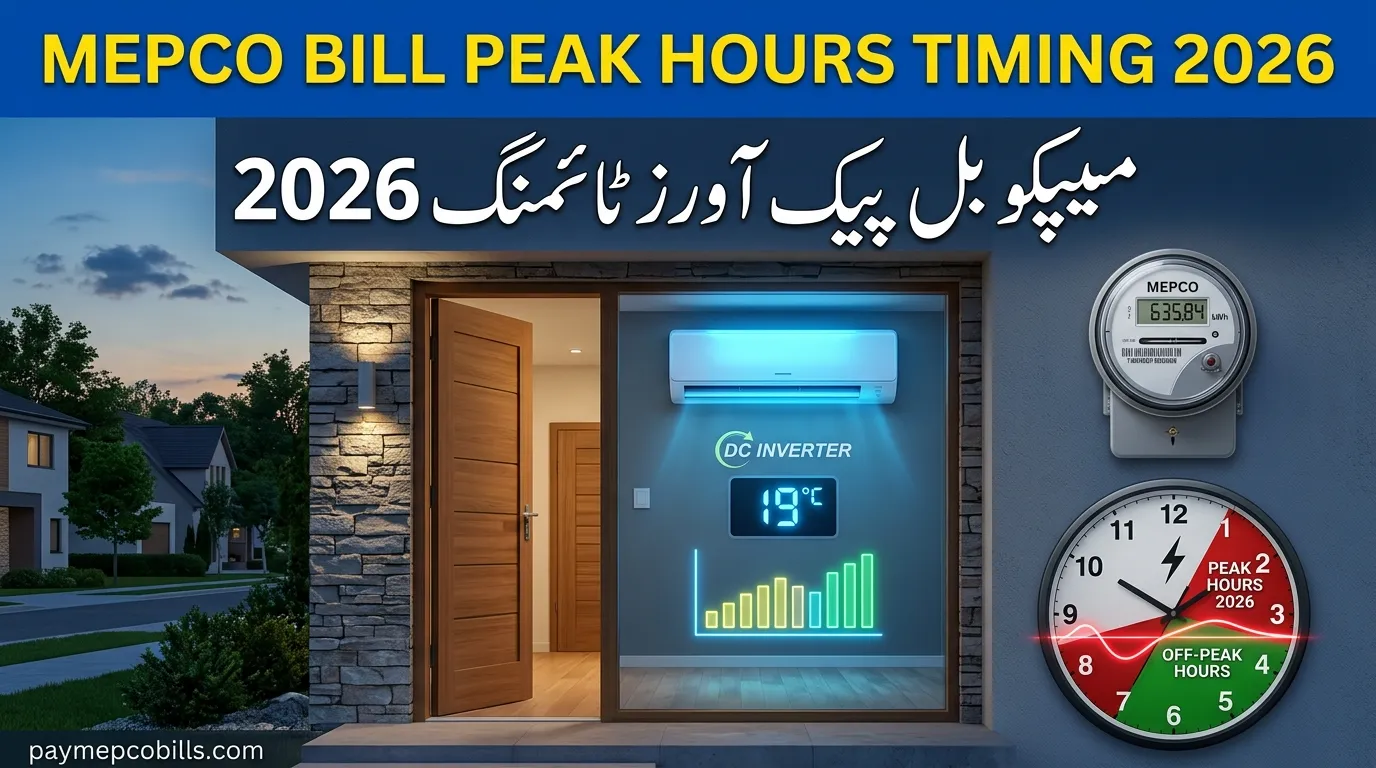
Complete Guide to MEPCO Bill Peak Hours Timing 2026
Managing monthly electricity expenses in South Punjab has become more crucial than ever. Multan Electric Power Company (MEPCO) enforces a daily peak hours billing system to balance power demand across its regional grid.Knowing the official MEPCO Bill Peak Hours Timing 2026 helps you avoid unexpected financial surcharges on your monthly invoice. By reducing high-wattage appliances like air conditioners, water pumps, and electric heaters during this daily 4-hour window, you can significantly lower your electricity cost.
This complete guide breaks down all seasonal MEPCO bill peak hours schedules, Time-of-Use unit rate calculations, and practical energy-saving strategies to help you maintain a balanced monthly utility budget.
What Are MEPCO Peak Hours and How Do They Work?
MEPCO bill peak hours are specific daily time slots when total energy demand across the regional electrical distribution network reaches its maximum level. During evening hours, when commercial plazas, street lights, and residential homes draw heavy power simultaneously, the main power grid faces severe over-saturation.
To prevent grid station failures and unexpected blackout trippings, utility authorities implement a Time-of-Use metering system. During peak demand hours, the per-unit tariff increases above the base rate, encouraging consumers to switch off unnecessary high-wattage equipment.
For 3-phase digital meters and modern Time-of-Use meters, unit consumption during these MEPCO bill peak hours is recorded in a separate internal data register. Every unit consumed within this peak window is billed at the highest financial tier, while off-peak units consumed during the rest of the day are calculated using standard rates.
Read More About Complete Guide to MEPCO Bill Payment Methods in 2026
Official Seasonal Schedule Breakdown for 2026
MEPCO divides the calendar year into four distinct seasonal schedule shifts. MEPCO bill peak hours windows adjust throughout the year based on changes in daylight availability and regional weather temperatures.
1. Summer Peak Timings (April to September)
Summer brings extreme heat waves across South Punjab, causing air conditioners and water pumping systems to run at maximum capacity.
- Active Hours Window: 06:00 PM to 10:00 PM daily (Total 4 Hours).
- Consumer Action Plan: Turn off heavy inverter air conditioners, water motors, clothing irons, and washing machines during these four hours, or keep overall household electricity load at an absolute minimum.
2. Autumn Peak Timings (October to November)
Autumn transition months bring milder weather, but shorter daylight hours increase evening lighting demand earlier in the day.
- Active Hours Window: 05:00 PM to 09:00 PM daily (Total 4 Hours).
- Consumer Action Plan: Turn off unnecessary indoor lighting fixtures and decorative outdoor lights after 5:00 PM.
3. Winter Peak Timings (December to February)
Winter months create evening demand spikes due to electric space heaters, instant water geysers, and heavy heating appliances.
- Active Hours Window: 05:00 PM to 09:00 PM daily (Total 4 Hours).
- Consumer Action Plan: Run electric water heaters and space heaters during off-peak hours to pre-heat water storage tanks before 5:00 PM.
4. Spring Peak Timings (March)
Spring days bring longer daylight hours, changing grid demand patterns once again.
- Active Hours Window: 06:00 PM to 10:00 PM daily (Total 4 Hours).
- Consumer Action Plan: Adjust your household appliance routines to match the changing schedule and verify the peak slot indicator on your meter screen.
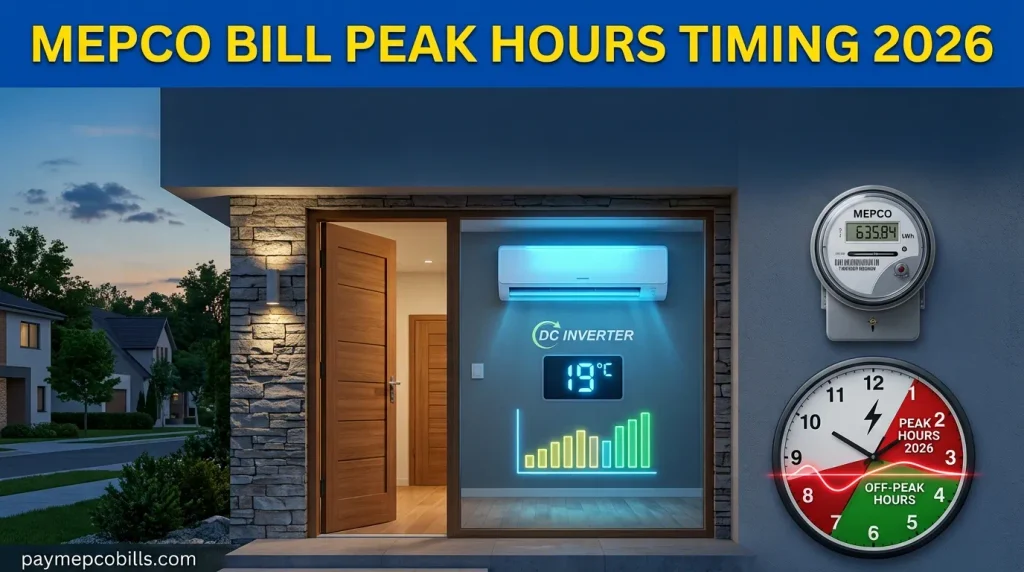
Understanding the Financial Difference: Peak vs. Off-Peak Rates
The MEPCO billing system handles peak and off-peak unit consumption differently. Digital Time-of-Use meters feature two dedicated data slots: Peak (P) and Off-Peak (OP).
- Peak Hours Tariff Rates: Tariff rates during high-demand hours are significantly higher because power distribution companies must run expensive peaking power plants to meet surge demand.
- Off-Peak Hours Tariff Rates: During the remaining 20 hours of the day, standard progressive tariff slabs apply, making electricity consumption much more affordable.
By following the MEPCO Bill Peak Hours Timing 2026 schedule and shifting heavy appliance usage to off-peak hours, a 3-phase residential consumer can reduce overall monthly electricity costs by 25% to 35%.
Practical Energy Saving Strategies for Homeowners
You can manage your electricity consumption and protect your budget during MEPCO Bill Peak Hours Timing 2026 by using these practical energy-saving practices:
- Stagger Appliance Usage: Schedule water pumps, clothing irons, laundry washing machines, and microwave ovens for early morning hours or after 10:00 PM.
- Pre-Cooling with Inverter ACs: Cool your living space thoroughly before peak hours begin. Once peak timing starts, set your air conditioner temperature to 26°C or 28°C so the compressor draws minimal power.
- Transition to Smart Inverter Technology: Replace old, fixed-speed appliances with full-DC inverter air conditioners and smart inverter refrigerators, which reduce power draw during startup spikes.
- Switch to Energy-Efficient LEDs: Replace traditional high-wattage bulbs with Energy Star-rated LED lights and tube lights to lower lighting demand.
- Set Automated Solar Inverter Schedules: If you have a hybrid or off-grid solar energy system, configure its automated settings to switch to battery or solar power during peak hours to avoid drawing grid electricity.
How to Verify Peak Unit Readings on MEPCO Duplicate Bills
You can check your peak unit consumption online using your 14-digit consumer reference number through official portals or mobile apps:
- Open the official bill management portal or the MEPCO Smart App on your device.
- Enter your 14-digit reference number into the bill search field.
- Scroll down to the Meter Reading History section on your digital bill preview.
- Locate the dedicated billing columns for Peak (P) and Off-Peak (OP) units.
- Compare your current month’s peak unit consumption with previous months to monitor your usage habits.






One Comment