
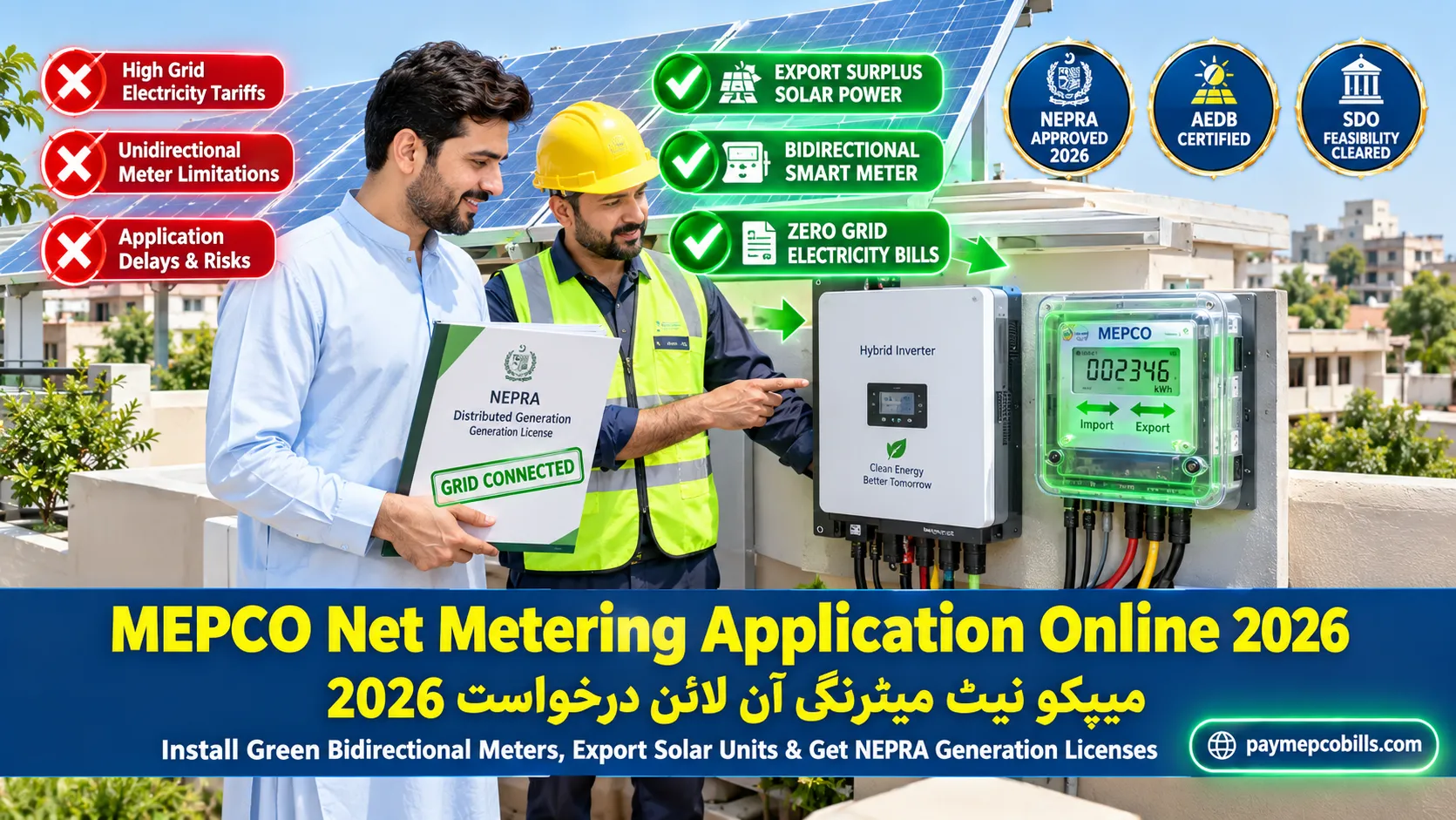
MEPCO Net Metering Application Online 2026 Guide
Installing a solar power system allows homeowners, commercial businesses, and industrial facility operators across South Punjab to generate clean energy and export surplus electricity back to the regional distribution network. Multan Electric Power Company offers a streamlined regulatory system that enables solar system owners to replace standard unidirectional meters with bidirectional smart meters. Navigating the official MEPCO Net Metering Application Online 2026 process allows property owners to reduce monthly grid electricity expenses, offset high peak-hour power tariffs, and secure legal NEPRA generation licenses. This detailed guide covers eligibility standards, technical feasibility surveys, three-phase bidirectional meter installations, grid interconnection agreements, and online application tracking.
What is Net Metering and How Does It Work?
Net metering is an innovative billing mechanism that credits solar energy system owners for the electricity they add to the power grid.
The operational workflow relies on two-way power flow:
- Daytime Surplus Generation: During peak sunny hours, your rooftop solar panels produce excess electricity beyond immediate household consumption, feeding surplus units into the regional grid.
- Bidirectional Unit Calculation: A green bidirectional meter records both imported units (drawn from the utility grid during nighttime) and exported units (sent to the grid during daytime).
- Monthly Billing Offsets: At the end of the monthly billing cycle, exported units are subtracted from imported units, requiring you to pay only for the net off-peak balance.
- Credit Rollover Rules: If your solar system exports more energy than your household consumes in a given month, net credits roll over to offset future billing statements.
Transitioning to net metering turns your property into a mini power plant while safeguarding your household against rising electricity tariffs.
Technical Eligibility Requirements for Solar Net Metering
Before applying for grid connection, solar power installations must satisfy technical criteria mandated by NEPRA regulatory rules.
Essential prerequisites include:
- Three-Phase Electricity Connection: Net metering requires an active three-phase residential or commercial electricity supply connection.
- Sanctioned Load Alignment: The capacity of your solar inverter must not exceed the sanctioned load listed on your official electricity bill.
- NEPRA Approved Solar Inverters: Only grid-tied or hybrid inverters listed on NEPRA’s certified manufacturer roster are eligible for interconnection.
- AEDB Certified Vendor Installation: Solar panel arrays and structural mounting must be installed by an Alternative Energy Development Board (AEDB) certified installer.
Meeting these technical prerequisites ensures rapid approval during initial sub-divisional feasibility surveys.

Step-by-Step Guide for MEPCO Net Metering Application Online 2026
Submitting your application electronically accelerates technical vetting and reduces processing time across regional divisions.
Follow these step-by-step instructions:
Step 1: Hire an AEDB Accredited Solar Vendor
Engage a certified solar EPC contractor to design your system, inspect site wiring, and prepare official single-line wiring diagrams (SLD).
Step 2: Prepare Technical File and Load Verification
Compile your latest paid electricity bill, property ownership documents, inverter technical specification sheets, and vendor system test reports.
Step 3: Online Portal Application Submission
Access the official web portal to log your net metering application, enter your 14-digit consumer reference number, and upload digital file scans.
Step 4: Technical Feasibility Survey by SDO
The Sub-Divisional Officer (SDO) and line superintendent inspect your property, verify transformer capacity margins, and issue an official Technical Feasibility Clearance.
Step 5: Sign Interconnection Agreement & NEPRA License
Sign the standard Distributed Generation Interconnection Agreement with the utility company and receive your NEPRA distributed generation license.
Step 6: Demand Notice Payment & Bidirectional Meter Setup
Pay the issued demand notice voucher for meter testing and connection inspection, after which field engineers install the green bidirectional meter.
Following this structured MEPCO Net Metering Application Online 2026 workflow ensures your solar interconnection file progresses smoothly without administrative holds.
Read More About MEPCO New Connection Demand Notice Fee 2026 Guide
Required Document Checklist for Net Metering Approval
Organizing a complete document binder prevents file rejections during sub-divisional scrutiny.
Keep these essential records ready:
- Attested CNIC Copy: Copy of the national identity card of the registered electricity account holder.
- Latest Paid Electricity Bill: Clear copy of the previous month’s bill showing zero outstanding arrears and an active three-phase connection status.
- System Single Line Diagram (SLD): Technical electrical schematic drawn and stamped by a certified electrical engineer.
- Inverter & Panel Datasheets: Technical specifications proving compliance with grid safety codes and anti-islanding protection standards.
- Vendor AEDB Registration Certificate: Copy of your solar installer’s valid license issued by the Alternative Energy Development Board.
- Signed Interconnection Agreement: Standard agreement form signed by the applicant and utility authority representatives.
Read More About MEPCO Bill Correction 2026 Online Application Guide
Benefits Of MEPCO Net Metering Application Online 2026
Net metering provides substantial long-term financial savings for domestic, agricultural, and industrial solar consumers.
Key financial advantages include:
- Reduction in Monthly Tariff Surcharges: Exported peak solar units directly offset high peak-hour unit rates on your monthly bill.
- Protection Against Tariff Hikes: Generating your own electricity hedges your household or business against future utility price increases.
- Quarterly Excess Unit Settlement: Excess exported credit units accumulated over multiple months are settled financially according to NEPRA tariff rates.
- Increased Property Value: Installing a net-metered solar power system enhances property resale value and energy independence.



One Comment