
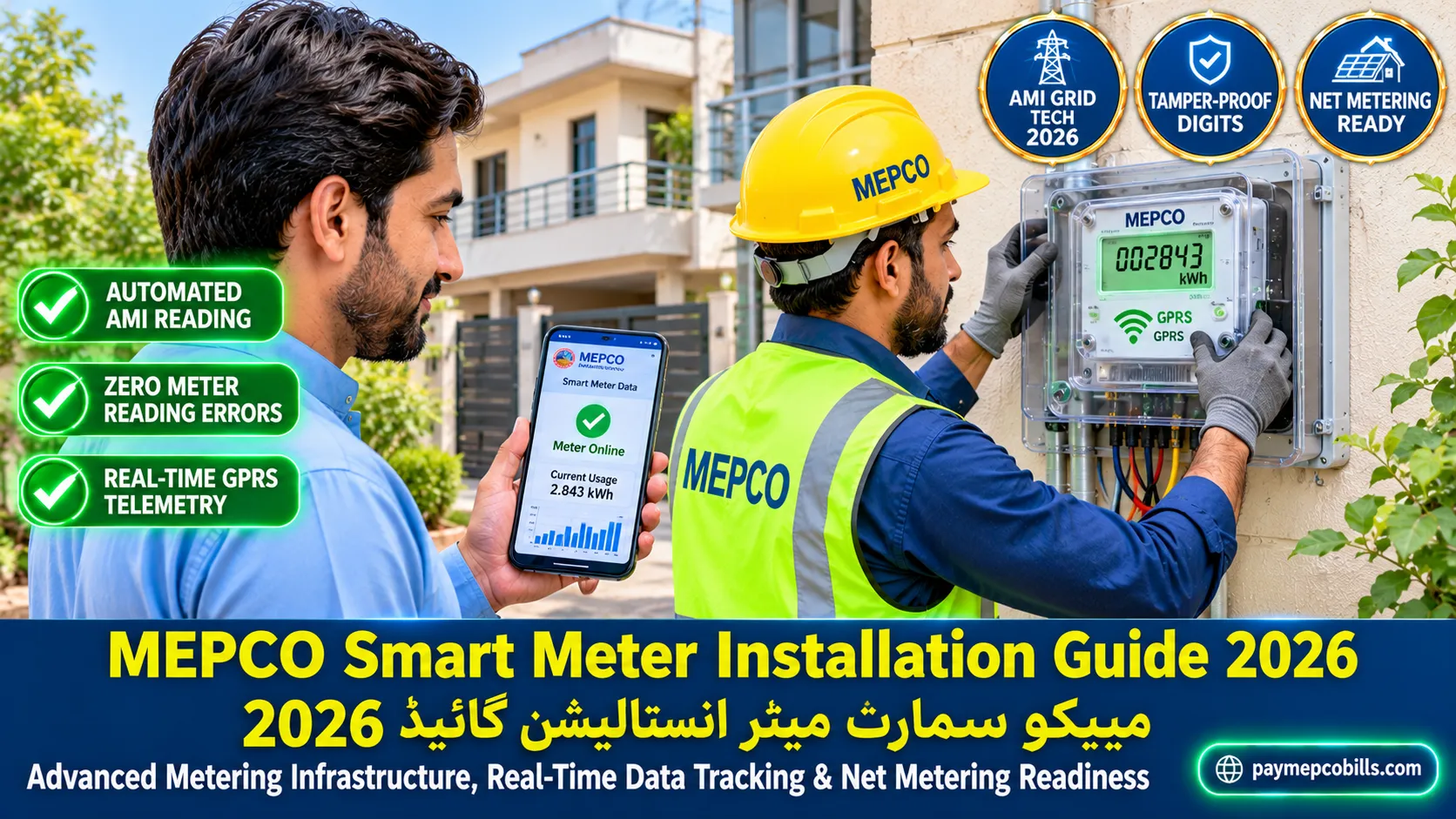
MEPCO Smart Meter Installation 2026 Guide
Modernizing the electrical distribution infrastructure across South Punjab has taken a massive step forward through Advanced Metering Infrastructure technology introduced by Multan Electric Power Company. Upgrading traditional mechanical and digital meters to automated two-way communication systems allows regional power managers to monitor real-time energy consumption, eliminate meter reading errors, and prevent distribution losses. Opting for a MEPCO Smart Meter Installation 2026 helps residential, commercial, and industrial consumers track hourly electricity usage patterns, receive automated billing alerts, and transition smoothly toward modern solar net metering setups. This comprehensive guide details smart meter operational features, sub-divisional deployment plans, installation requirements, and key consumer advantages.
What is an AMI Smart Meter and How Does It Work?
Advanced Metering Infrastructure (AMI) represents a revolutionary transition from traditional manual utility meters to fully digital, networked energy management hardware.
Key operational capabilities of smart meters include:
- Two-Way GPRS Data Transmission: Built-in cellular SIM chips automatically transmit live consumption data every few minutes directly to central data servers.
- Elimination of Manual Meter Readings: Field meter readers no longer need to physically visit premises, eliminating human recording errors and inaccurate unit snapshots.
- Real-Time Remote Power Monitoring: Utility load dispatchers can detect local power outages, line faults, and transformer overloads instantaneously from central control centers.
- Automated Demand Management: Smart meters measure off-peak and peak-hour unit consumption with absolute accuracy, enabling precise tariff applications.
Adopting this modern grid architecture ensures that utility consumers receive accurate, tamper-proof monthly statements based on actual digital meter telemetry.
Technical Advantages of MEPCO Smart Meter Installation 2026
Upgrading utility hardware provides substantial advantages for both property owners and grid operators across Multan, Bahawalpur, Dera Ghazi Khan, and surrounding sub-divisions.
Core consumer benefits include:
- Elimination of Overbilling Discrepancies: Automatic digital logging prevents wrong meter readings, fake unit estimations, and duplicate arrear surcharges.
- Instant Power Theft and Tamper Detection: Integrated sensors alert sub-divisional monitoring teams immediately if meter covers are opened or unauthorized bypasses are attempted.
- Seamless Solar Net Metering Integration: Smart meters automatically support bidirectional power measurement, making rooftop solar installations simpler and faster to connect.
- Remote Load Disconnection and Reconnection: Consumers paying overdue bills online can have their power restored within minutes via central server commands without waiting for field linemen.
Undergoing a MEPCO Smart Meter Installation 2026 transforms how households interact with the regional power grid while protecting consumer accounts against unnecessary billing disputes.
Step-by-Step Sub-Divisional Deployment and Upgrade Process
Multan Electric Power Company is systematically rolling out smart meters across high-density feeder sectors, commercial hubs, and industrial zones under official modernization schemes.
Here is how the administrative installation process works:
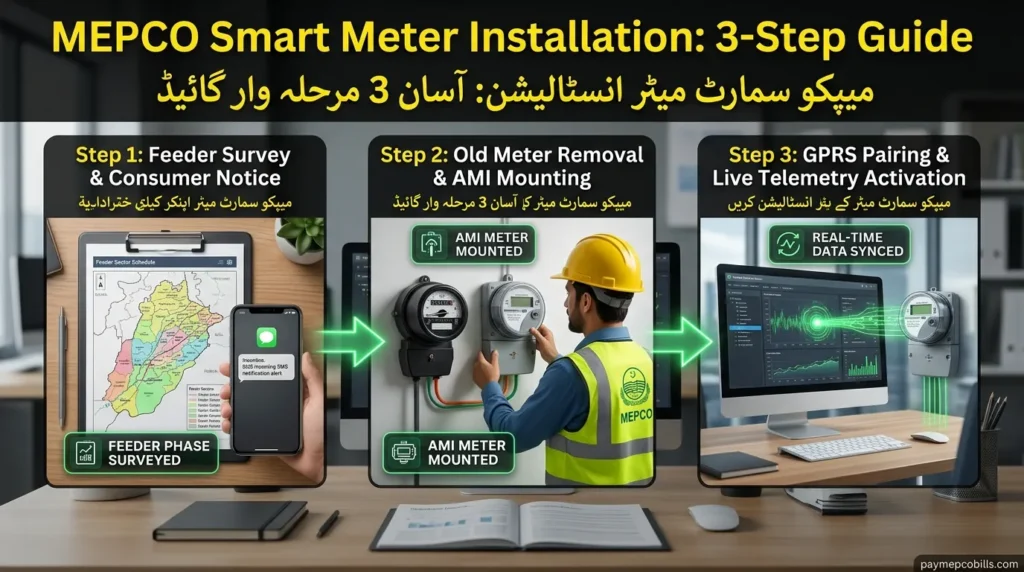
Step 1: Sub-Divisional Phase Allocation
Sub-divisional revenue offices schedule specific feeders and residential colonies for AMI upgrades based on technical grid surveys and feeder loss assessments.
Step 2: Formal Consumer Notification
Property owners receive written notices or SMS alerts regarding scheduled meter replacement dates in their respective neighborhood feeders.
Step 3: On-Site Meter Inspection and Verification
Utility technical teams visit the premises to verify existing meter wiring, terminal block conditions, and consumer reference numbers.
Step 4: Meter Removal and AMI Unit Mounting
Field engineers safely disconnect the old mechanical or static meter, install the new AMI smart meter unit, and pair the internal SIM module with the central network.
Step 5: Final Calibration and System Integration
The installer records final readings from the old meter, verifies active data transmission from the smart meter, and updates the consumer’s digital billing profile.
Following these standardized steps for a MEPCO Smart Meter Installation 2026 guarantees safe electrical connections and accurate historic reading transfers.
Read More About MEPCO Bill Check By CNIC Number Guide 2026
Required Documentation and Consumer Preparation Guidelines
While phased grid rollouts are managed directly by utility teams, property owners requesting dedicated upgrades or net-metering conversions must keep official documents ready.
Prepare the following paper binder for sub-divisional review:
- Attested Applicant CNIC Copy: Valid national identity card copy of the registered electricity account holder.
- Latest Paid Electricity Bill: Clear copy of the previous month’s bill verifying zero pending arrears on the account.
- Property Access Authorization: Ensured clear physical access to the main outdoor meter box for technical linemen.
- Wiring Safety Certificate: Stamped wiring safety endorsement from a certified electrician for high-load commercial or three-phase connections.
Ensuring your external meter location is accessible and well-maintained prevents site delays during scheduled technical installations.
Read More About MEPCO New Electricity Meter Connection Fee 2026
Future Outlook for Smart Grid Infrastructure
Implementing Advanced Metering Infrastructure lays the groundwork for sustainable energy management across South Punjab. As regional power demand grows, smart meters empower consumers to track daily consumption trends through digital mobile dashboards, optimize appliance usage during cheaper off-peak hours, and contribute to grid stability. Embracing a MEPCO Smart Meter Installation 2026 guarantees long-term energy reliability, transparent billing, and effortless compatibility with modern renewable energy systems.



One Comment