
MEPCO Defective Meter Replacement Application 2026
Dealing with a burnt, slow, screen-damaged, or inaccurate electricity meter causes unfair detection billing, unexpected average unit surcharges, and potential power disconnections across South Punjab. Multan Electric Power Company provides an official administrative procedure allowing residential, commercial, and industrial consumers to replace damaged metering equipment legally. Understanding the complete MEPCO Defective Meter Replacement process ensures your utility account receives accurate monthly meter readings without incurring illegal overbilling penalties. This comprehensive manual covers online complaint filing, physical lab testing routines, sub-divisional inspection procedures, replacement fee structures, and practical steps to track your meter replacement file until new equipment installation is completed.
Signs and Symptoms of a Defective Meter
Identifying meter malfunctions early prevents accumulated detection bills and protects home electrical circuits from sudden short-circuit damage.
Common indicators requiring an official MEPCO Defective Meter Replacement include:
- Blank or Creeping Digital Display: The liquid crystal display (LCD) goes blank, pulses erratically, or continues registering units when all main circuit breakers are turned off.
- Burnt Terminal Blocks or Smell: Physical signs of melting insulation, burnt plastic odor, or black soot marks around the meter connection terminals.
- Abnormal Unit Jumps: Meter readings spike unrealistically high or stop moving entirely despite active household electricity consumption.
- Red Error LED Indicators: Steady warning lights labeled ‘Reverse’, ‘Earth Leakage’, or ‘Defective’ illuminated on the front panel of the meter.
Detecting any of these technical faults requires immediate administrative reporting to avoid penalty surcharges on subsequent billing cycles.
Step-by-Step Application Procedure for Meter Replacement
Submitting an official replacement request requires following specific sub-divisional protocols to ensure technical validation by utility inspectors.
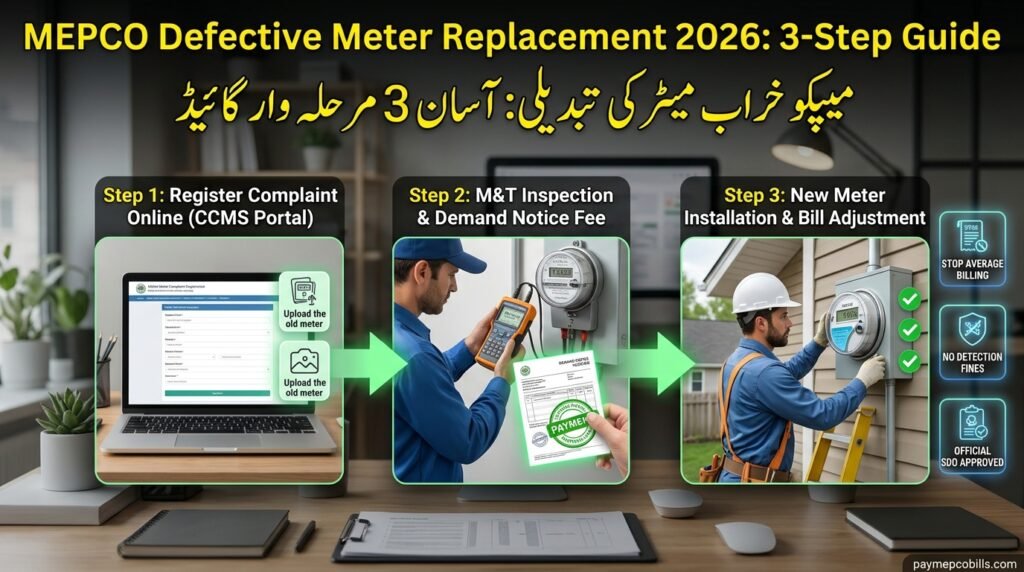
Follow these step-by-step instructions to initiate your application:
Step 1: Submit Complaint via CCMS or SDO Office
Register an official complaint on the Central Complaint Management System (CCMS) web portal or visit your local Sub-Divisional Officer (SDO) to fill out a defective meter replacement application form.
Step 2: Site Verification by Sub-Divisional Meter Reader
A field meter reader or lineman visits your premises to verify physical symptoms, record meter serial numbers, and mark the status as ‘Defective’ or ‘Burnt’ on the official meter reading sheet.
Step 3: Technical Survey and M&T Testing
The Metering and Testing (M&T) division conducts a diagnostic inspection or issues a formal lab report confirming internal component failure or current leakage.
Step 4: Demand Notice Issuance and Payment
The SDO office generates an official Demand Notice covering new meter costs (if damage occurred due to consumer fault) or processes a free replacement (if failure resulted from technical grid surges).
Step 5: Meter Installation and Record Update
Field technicians install the new digital meter, record the final removal reading of the defective unit, and update the central billing database.
Following this structured MEPCO Defective Meter Replacement workflow guarantees that your account transitions back to actual monthly unit billing without administrative delays.
Essential Documents Required for Meter Replacement
Submitting complete documentation alongside your application form ensures swift approval by sub-divisional scrutiny officers.
Keep the following verified credentials ready:
- Attested CNIC Copy: Copy of the registered electricity account owner’s national identity card.
- Latest Paid Utility Bill: Clear copy of the previous month’s bill showing zero outstanding arrears.
- Physical Meter Photographs: Clear photos showing the defective display, burnt terminal box, or error light status.
- Application Form Signed by Titleholder: Completed meter replacement form detailing the nature of the malfunction.
- No Objection Certificate (NOC): Required from the legal property owner if the connection is registered under a landlord’s name.
Organizing these documents in a clean submission folder accelerates administrative sign-off at the executive engineer level.
Read More About MEPCO Single Phase to 3 Phase Meter Conversion 2026
Understanding Average Billing and Detection Bills During Replacement
While a replacement file is processed, utility companies issue temporary bills based on historical consumption patterns to maintain revenue continuity.
Key aspects of temporary billing rules include:
- Average Monthly Billing: Bills calculated using the average unit consumption recorded during the corresponding month of the previous year.
- Detection Bill Rules: Extra charges levied if technical testing proves meter tampering, phase bypass, or illegal neutral wire connections.
- Maximum Slashing Limits: Regulations restrict temporary average billing periods to a maximum of two to three billing cycles while replacement equipment is procured.
- Bill Adjustment After Installation: Once the new meter is operational, past average bills are reconciled against verified historical averages upon consumer request.
Monitoring temporary billing statements closely prevents unfair overcharges during the transition window.
Read More About MEPCO Agricultural Tube Well Bill 2026 Guide
Fee Structure and Replacement Timelines
Knowing the financial liability and standard turnaround times helps consumers track file progress effectively.
Standard timelines and fee policies include:
- Manufacturing Defect (Free Replacement): If lab tests confirm internal component failure due to age or grid fluctuations, the utility company replaces the meter free of charge.
- Consumer Fault or Burnt Meter Charges: If the burnout resulted from internal property short circuits or unapproved load extensions, the consumer pays the official meter replacement demand notice.
- Standard Replacement Window: Official guidelines mandate meter replacement within 7 to 14 working days after demand notice payment and lab clearance.
Taking active follow-up measures at your local sub-division ensures your MEPCO Defective Meter Replacement stays within mandatory timeline limits.





One Comment