MEPCO Wrong Meter Reading Correction 2026 Guide
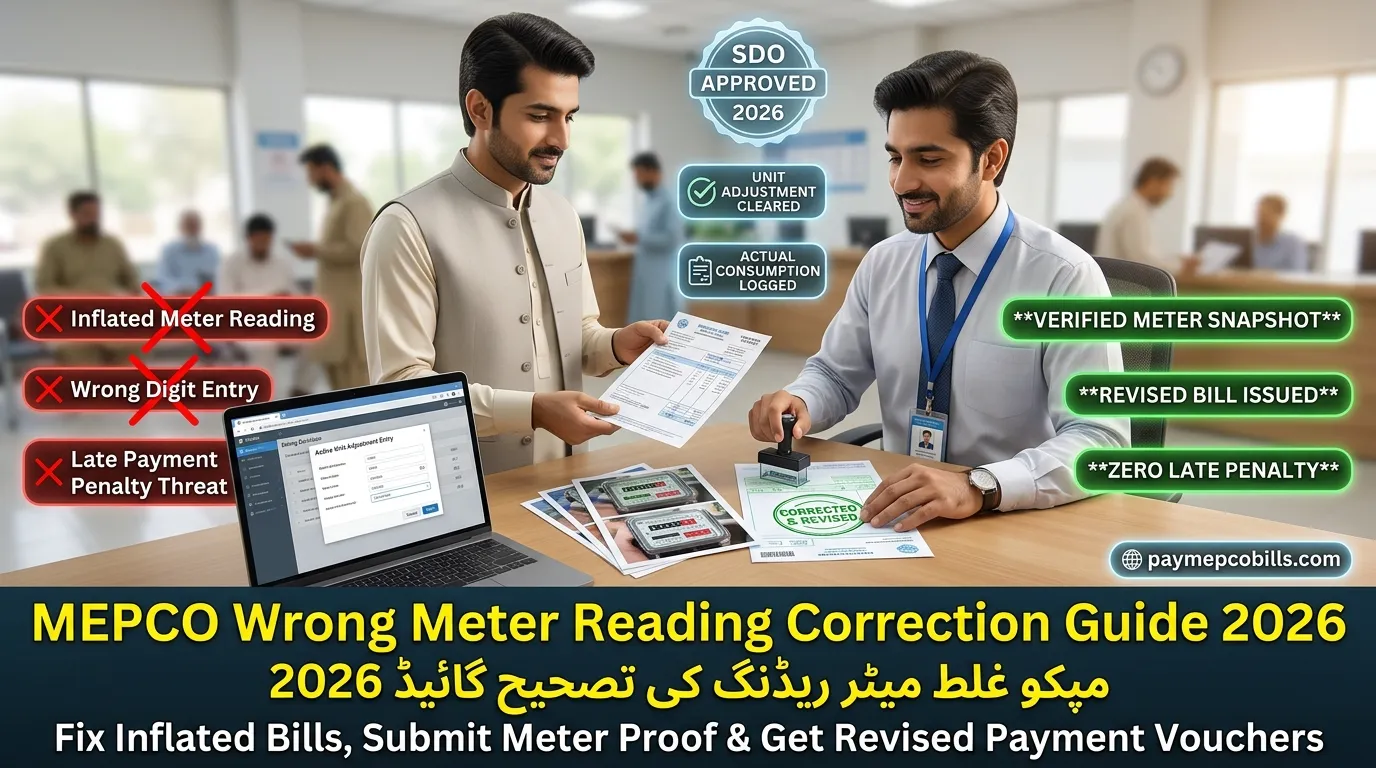
Receiving an inflated electricity bill due to human error during monthly meter readings causes severe financial distress for consumers across South Punjab. Multan Electric Power Company relies on field staff to take manual reading snapshots, but incorrect unit entries, illegible meter photos, or misread digital digits frequently lead to excessive overbilling. Initiating a MEPCO Wrong Meter Reading Correction process enables residential, commercial, and agricultural account holders to rectify billing errors, adjust false unit charges, and issue updated payment vouchers before due dates. This comprehensive guide details common causes of meter reading mistakes, step-by-step correction procedures, required evidence documentation, and practical tips to avoid late payment penalties.
Primary Causes of Incorrect Meter Readings
Utility meter reading errors happen across various distribution sub-divisions due to field operational challenges and human oversight.
Common reasons for incorrect billing units include:
- Inaccurate Digital Reading Entries: Meter readers mistyping single digits into mobile billing handsets, recording higher consumption numbers than actual display readings.
- Blurry or Incorrect Meter Photographs: Submitting unreadable or mismatched meter dial photographs during monthly billing upload routines.
- Inaccessible External Meter Locations: Locked gates or obstructed meters leading field staff to assign artificial, higher estimated unit numbers rather than actual readings.
- Meter Rollover or Reset Discrepancies: Failing to adjust reading logs when digital meters reach maximum digit capacity and roll back to zero.
Identifying the exact nature of the reading discrepancy ensures that your correction application is processed without administrative delays.

Step-by-Step Procedure for Meter Reading Correction
Rectifying a misread electricity bill requires submitting physical proof to your local sub-divisional revenue office before making payments.
Follow these primary operational steps:
Step 1: Capture Clear Physical Meter Proof
Take two high-resolution photographs of your electric meter screen. Ensure one photo clearly displays the current kilowatt-hour (kWh) reading and the second photo captures the serial number printed on the meter box.
Step 2: Compare Bill Reading with Meter Screen
Subtract the previous reading on your current bill from your live meter display. If the live screen reading is lower than the current reading printed on your bill, an overbilling reading error is confirmed.
Step 3: Draft a Formal Correction Application
Write an application addressed to your Sub-Divisional Officer (SDO) stating your 14-digit reference number, current meter reading, printed bill reading error, and a polite request for physical meter verification.
Step 4: Submit Application at Sub-Divisional Office
Deliver your written application along with the original incorrect bill copy, applicant CNIC copy, and printed meter display photographs to the local revenue customer desk.
Step 5: Receive Revised Billing Voucher
Upon physical or system verification by the sub-divisional meter inspector, the office issues a hand-corrected or freshly printed revised duplicate bill reflecting actual consumed units.
Executing a MEPCO Wrong Meter Reading Correction through official sub-divisional channels guarantees that you only pay for actual electricity consumed.
Read More About MEPCO Smart Meter Installation 2026 Guide
Required Documentation Binder for Application Submission
Submitting a complete set of supporting documents accelerates verification and prevents office rejection.
Assemble the following papers for your SDO submission:
- Written Application to SDO: Formal request detailing meter reading discrepancies signed by the registered consumer.
- Original Incorrect Electricity Bill: The current month’s printed utility bill displaying the misread unit figures.
- Attested CNIC Copy: Copy of the registered account holder’s valid computerised national identity card.
- Dated Meter Screenshots/Photos: Printed photos displaying the live meter screen reading alongside the meter box serial number.
- Previous Month Paid Bill Receipt: Copy of the preceding month’s paid bill proving zero historical arrears.
Keeping these documents organized ensures swift approval by sub-divisional revenue officers during office visits.
Read More About MEPCO Tariff Calculator Online Guide 2026
What to Do If Your Due Date Is Approaching
If your bill due date is near and your correction application remains pending, take immediate preventive action to avoid late payment surcharges.
Recommended emergency measures include:
- Request Due Date Extension: Ask the Customer Care Officer or SDO to grant a formal due date extension stamp on your bill while physical inspection takes place.
- Obtain Temporary Installment Approval: In cases of severe overbilling, request a temporary payment adjustment or provisional voucher from the Revenue Officer to keep your connection active.
- Escalate to Regional Customer Centers: Visit the regional Circle Customer Complaints Office if sub-divisional staff fail to issue a corrected bill within 48 hours of submission.
Proactive account management prevents unauthorized service disconnections and eliminates extra late payment penalties while waiting for corrections.
How Smart Meters Eliminate Reading Errors Completely
Transitioning to modern digital Advanced Metering Infrastructure (AMI) provides a permanent solution to manual reading errors.
Key long-term benefits of smart meters include:
- Automated Data Transmission: Built-in cellular modules send exact consumption figures directly to central billing servers without manual human intervention.
- Real-Time Telemetry Audits: System servers automatically detect and flag reading anomalies before monthly bills are printed and dispatched.
- Tamper and Error Detection: Digital logs prevent estimated billing entries and record precise hourly unit usage.
Understanding the long-term advantages of modern grid technology alongside executing a MEPCO Wrong Meter Reading Correction protects account holders against recurrent billing errors.




One Comment